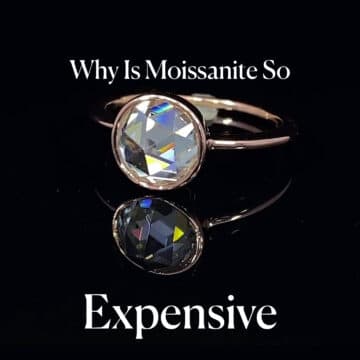
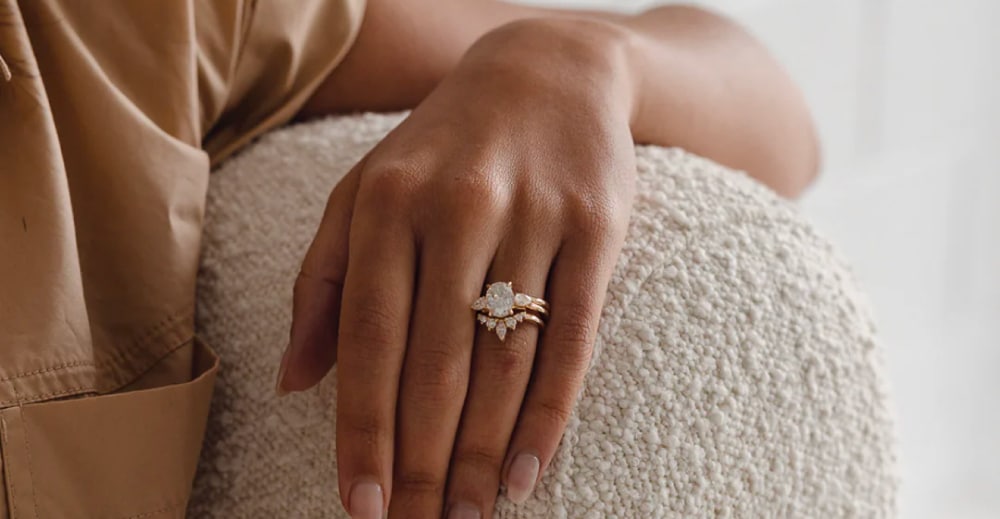


The weight of Moissanite comparing to diamond is approximately 15-18% lighter. Because Moissanite has a lower density (3.22 g/cm³) than diamond (3.52 g/cm³), a 1-carat Moissanite is physically larger in millimeter size than a 1-carat diamond. This means buyers get a larger-looking stone for the same “carat” weight.
Deal Alert: Fast-Shipping Gifts — Up to 50% Off* fine jewelry at Blue Nile !
One In A Lifetime Sale: “Clear The Vault” – Get up to 70% OFF on select jewelry at Blue Nile !
Exclusive Offer: Flash Sale on James Allen Up to 40% Off * Sitewide engagement ring settings & Fine Jewelry at James Allen .
Stop right there. If you are shopping for Moissanite using the same logic you use for diamonds, you are making a mistake. The number one secret retailers don’t always explain is that “Carat” is a measure of weight, not size. And because Moissanite is lighter, the rules of the game change—in your favor.
I’m going to break down the science of specific gravity and turn it into a buying strategy that will save you money and get you a bigger rock.
Think You’re A Moissanite Pro?
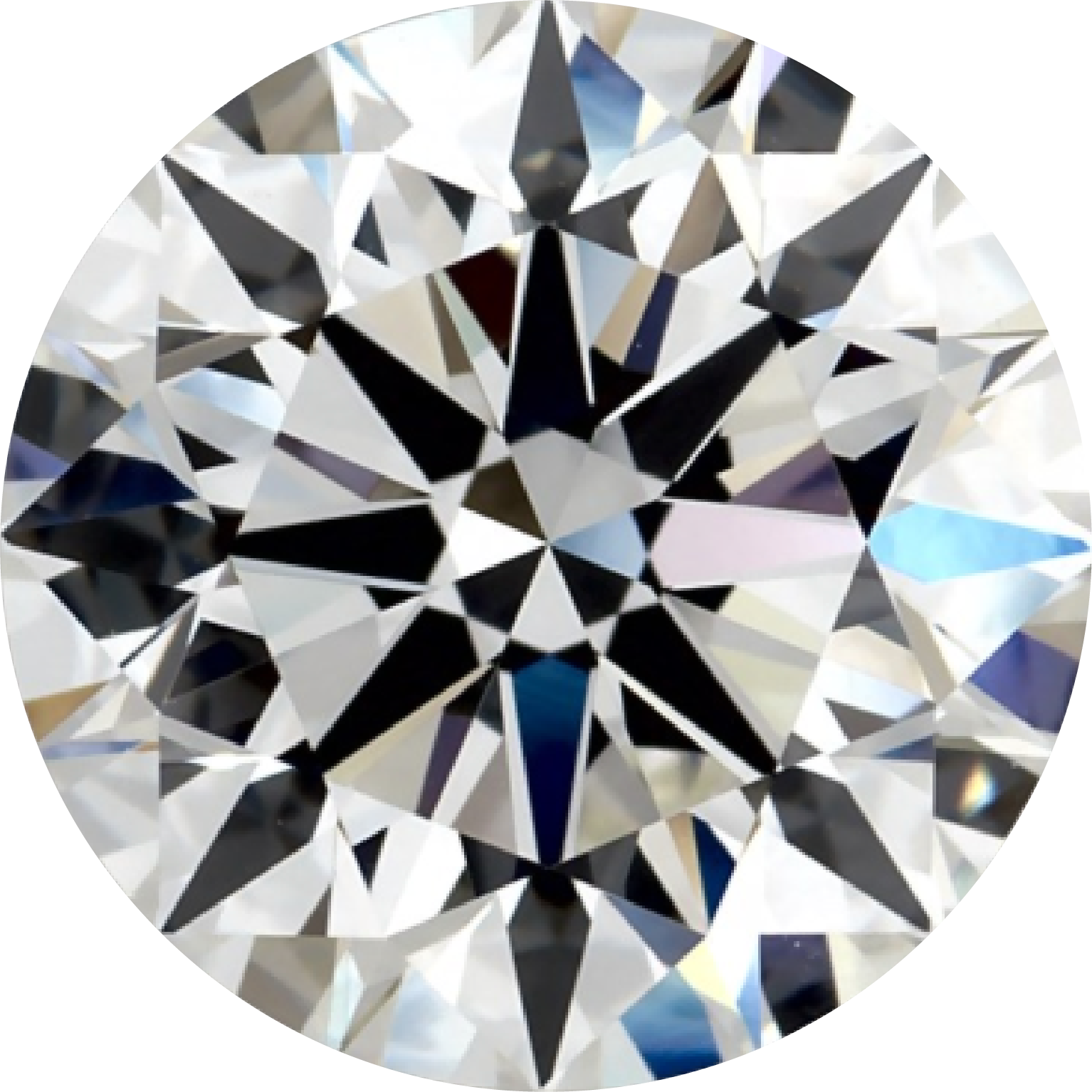
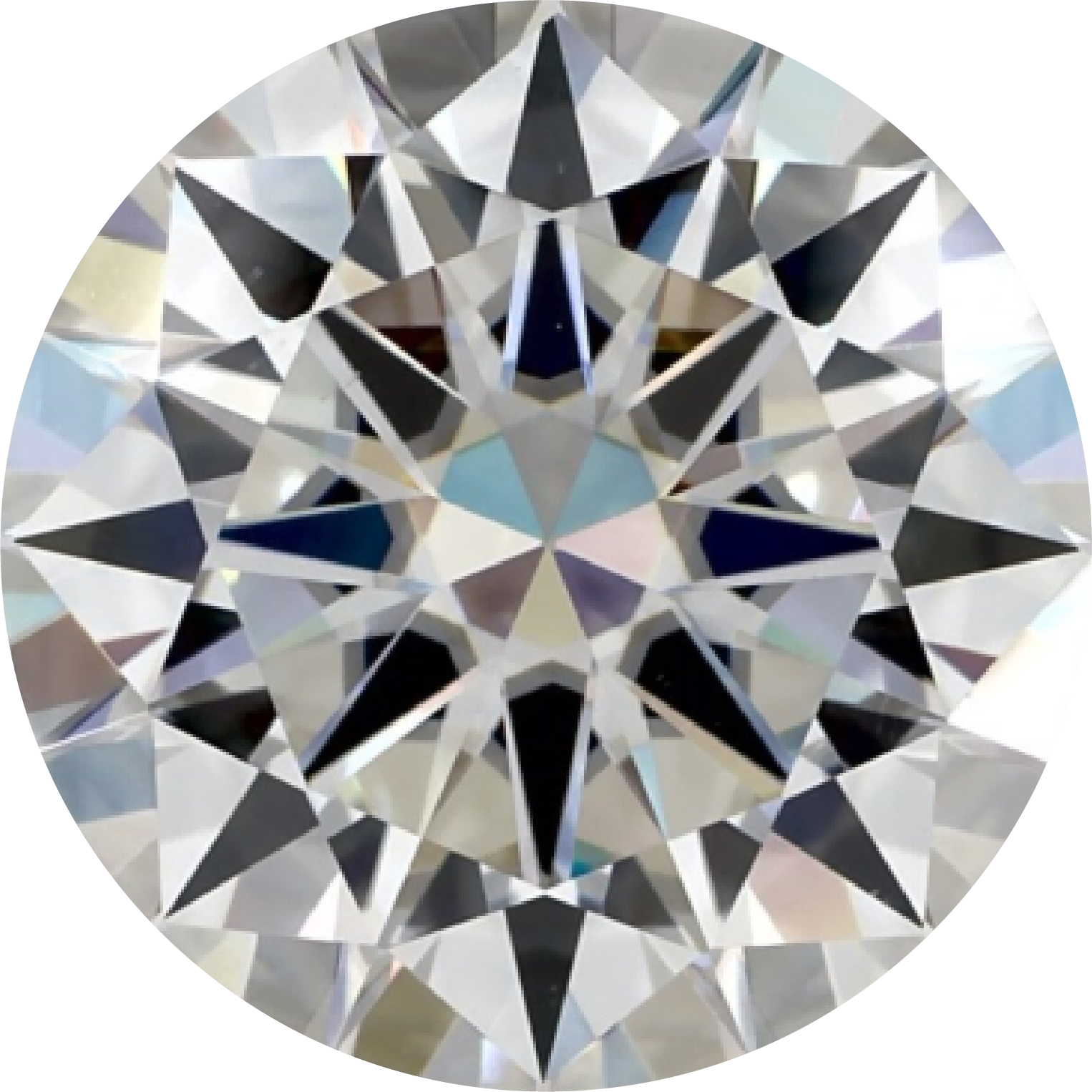
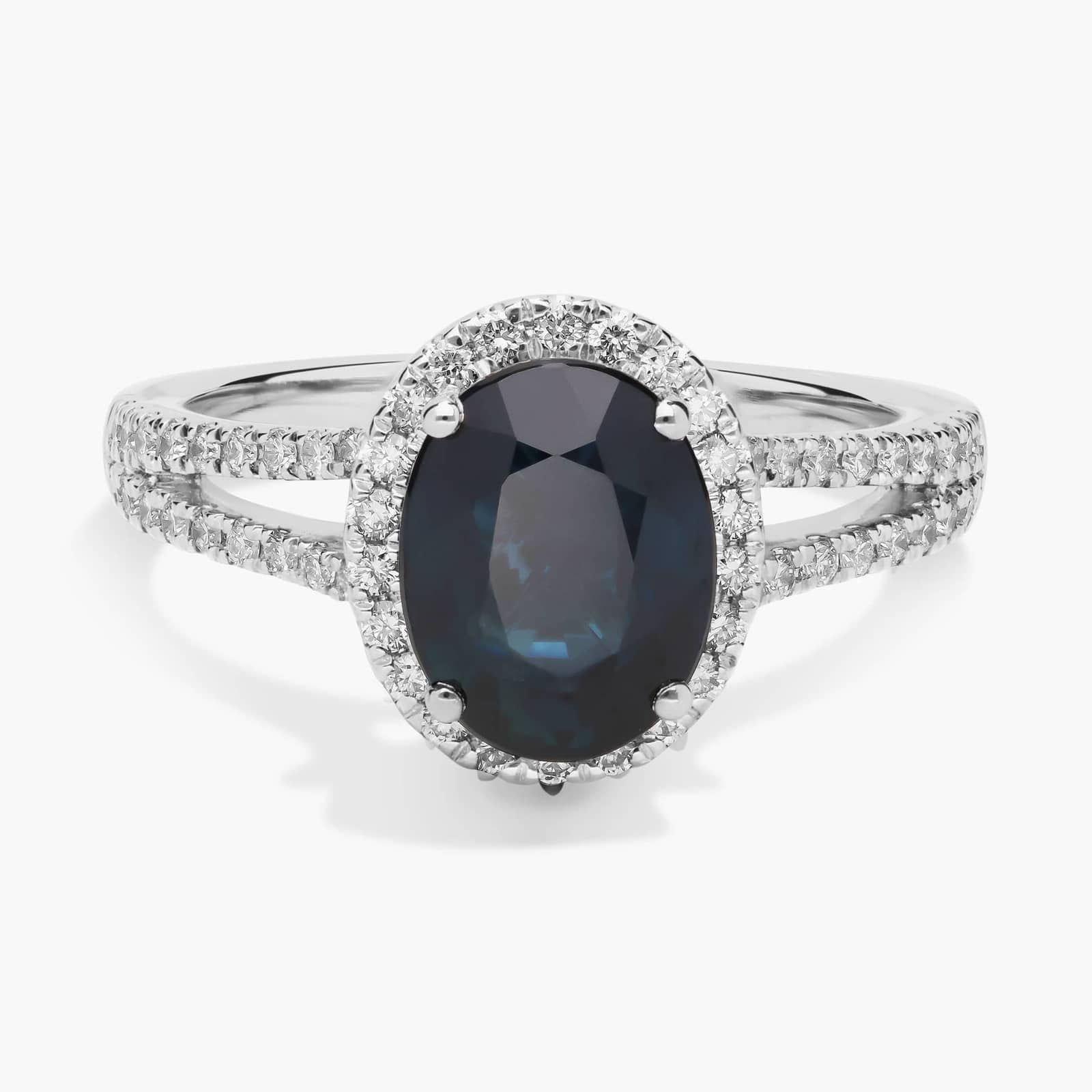
Think you’re a Moissanite Pro and can tell the difference? Choose the gemstone that you like better. Is it the one for $1,180 or the one for $39,000? Both are 2.48 carats.
The Science Simplified: Specific Gravity & Density
I promise I’m not here to bore you with a high school chemistry lecture. But if you want to understand why you might be overpaying for “carats,” you need to understand one concept: Specific Gravity (SG).
Think of it like a bowling ball and a beach ball. They might be the same size (volume), but the bowling ball is much heavier (denser).
Diamonds are the bowling balls in this scenario. They are incredibly dense carbon structures. Moissanite is made of Silicon Carbide, which is naturally lighter.
Here is the data that matters:
- Diamond Density: 3.52 g/cm³
- Moissanite Density: 3.22 g/cm³
So, what does this actually mean for you? It means that Moissanite is “fluffier” (in a good way). Because the material is lighter, it takes more physical Moissanite gemstone to equal the weight of a 1-carat diamond.
When you put a 1-carat diamond and a 1-carat Moissanite on a scale, they both weigh exactly 0.2 grams. But because the Moissanite is lighter, that 0.2 grams takes up more space. It creates a physically larger stone.
The Visual Reality: Carat Weight vs. Millimeter Size
This is where the rubber meets the road—and where you save money.
In the diamond world, price jumps massively when you hit “magic numbers” like 1.00 carat, 1.50 carat, or 2.00 carat. Retailers know we are obsessed with that weight number.
But with Moissanite, we play by different rules. Because it is 15-18% lighter, a Moissanite stone sold as “1 Carat” is often sized by millimeter (mm) to match the look of a diamond, not the weight.
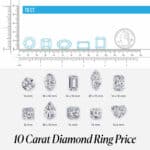
If you bought a Moissanite that was exactly the same physical size (6.5mm) as a 1-carat diamond, it would only weigh about 0.88 carats. But nobody wants to buy a “0.88 carat” engagement ring, right?
The “Look Bigger” Comparison Table
This table is your secret weapon. It shows you exactly how much “visual size” you are getting.
| Shape | Diamond Weight (Approx.) | Moissanite Actual Weight | Visual Size (Diameter) | Mehedi’s Take |
|---|---|---|---|---|
| Round | 1.00 Carat | ~0.88 Carat | 6.5 mm | You pay for less weight but get the same 1ct look. |
| Oval | 1.00 Carat | ~0.85 Carat | 8.0 x 5.5 mm | Ovals already look big; Moissanite maximizes this. |
| Cushion | 1.00 Carat | ~0.90 Carat | 6.0 x 6.0 mm | A perfect square face-up appearance. |
| Emerald | 1.00 Carat | ~0.88 Carat | 7.0 x 5.0 mm | The lighter weight is invisible to the naked eye. |
The “DEW” Secret (Diamond Equivalent Weight)
You will see the term DEW all over Moissanite websites. It stands for Diamond Equivalent Weight.
Retailers use this to stop you from getting confused. Instead of listing a stone as “6.5mm / 0.88ct,” they list it as “1.00ct DEW.” They are telling you: “This stone looks exactly like a 1-carat diamond.”
My Advice: Always ignore the carat weight listed on the product page and look for the mm size. The millimeter measurement is the only truth that tells you how big that rock will look on your partner’s finger.
If you are still weighing the pros and cons of these two stones beyond just their size, I’ve broken down the full durability and sparkle differences in my detailed Moissanite vs Diamond Comparison.
Does “Lighter” Mean It Feels Fake? (The Tactile Myth)
Let’s be brutally honest. This is the fear that keeps people up at night before they click “buy.” You’re worried you’ll open the box, pick up the ring, and it will feel flimsy—like plastic, glass, or a toy from a vending machine.
I need to kill that myth right now with hard math.
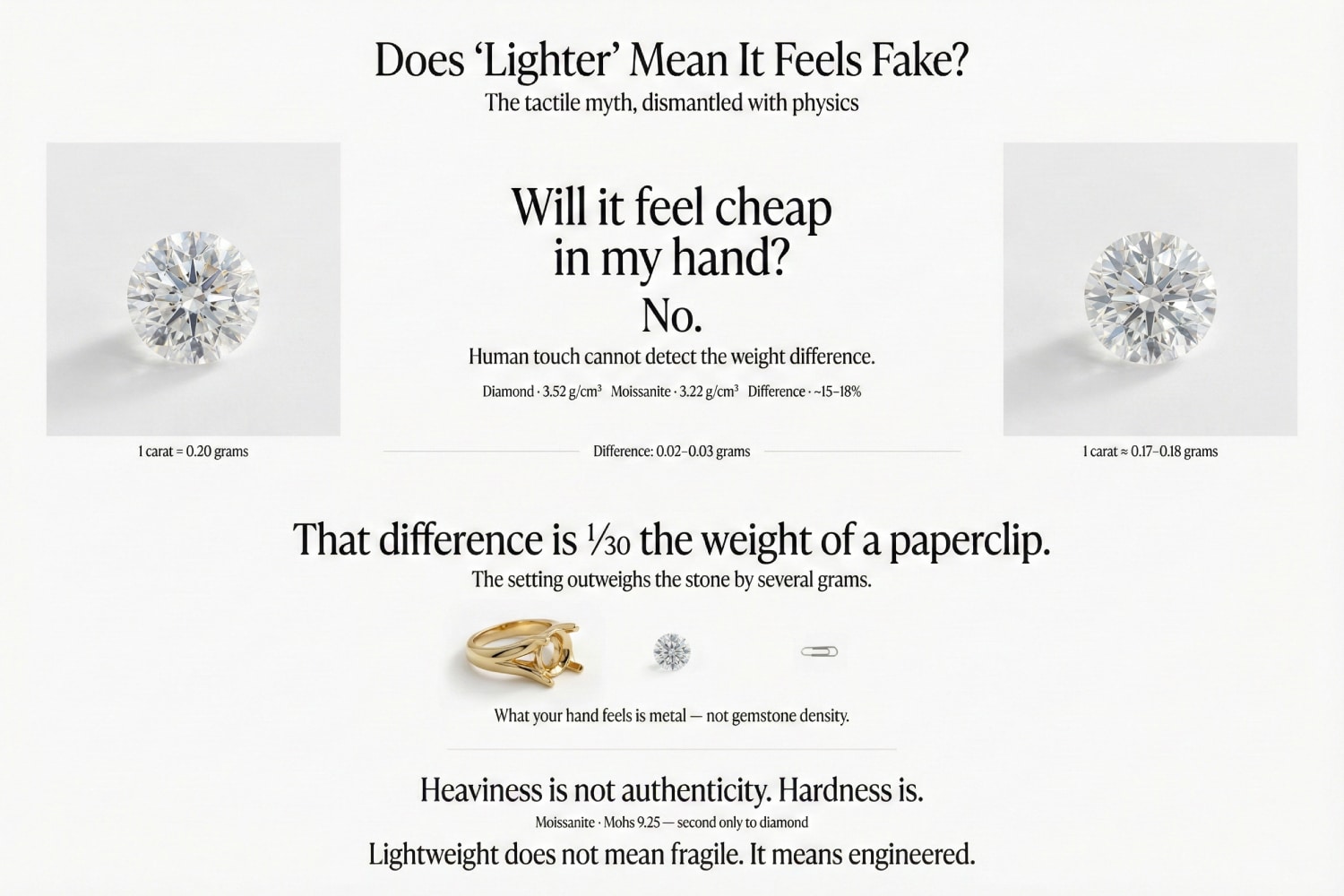
While it is a scientific fact that Moissanite (3.22 g/cm³) is about 15-18% lighter than Diamond (3.52 g/cm³), human hands are not calibrated digital scales.
The Gram-Weight Reality Check
Let’s look at the actual numbers. In the jewelry world, weight is measured in tiny increments.
- 1 Carat Diamond: Weighs exactly 0.20 grams.
- 1 Carat DEW Moissanite: Weighs approximately 0.17 – 0.18 grams.
The difference? 0.02 to 0.03 grams.
To put that in perspective, a standard paperclip weighs about 1.0 gram. The difference in weight between a diamond and a Moissanite is roughly 1/30th the weight of a paperclip.
When you hold a ring, you are mostly feeling the weight of the gold or platinum setting (which usually weighs between 3 to 6 grams). The gemstone itself makes up a tiny fraction of the total heft. Unless you have superpowers, you cannot feel the difference.
The “Heavy” Imposter: Cubic Zirconia (CZ)
Here is where it gets interesting. Many people associate “heavy” with “real” because cheap costume jewelry often uses glass or plastic. But if we look at Simulated Diamond vs Moissanite, the most common cheap stimulant is Cubic Zirconia (CZ).
Cubic Zirconia is actually heavier than diamond!
- CZ Density: ~5.6–6.0 g/cm³ (almost 1.7x denser than diamond).
So, if “heaviness” were the sign of authenticity, a $20 CZ ring would feel “more real” than a $20,000 diamond. Clearly, weight is not the quality signal you should be worrying about.
Light but Indestructible
Don’t confuse “lightweight” with “fragile.” This is a critical distinction.
- Lead is heavy, but it’s soft and scratches easily.
- Titanium is incredibly light, but it’s used to build fighter jets.
Moissanite falls into the “Titanium” category. It is lighter than diamond, but it is one of the hardest substances on Earth, scoring a 9.25 on the Mohs Hardness Scale (second only to diamond).
It is built to last a lifetime of daily wear without scratching or losing its sparkle. If you are worried about the stone degrading over time because of its weight or composition, you need to read my investigation: Will Moissanite Get Cloudy? Discover the Truth.
Mehedi’s Bottom Line: The lower density of Moissanite is purely a chemical property, not a quality flaw. It doesn’t make the stone feel “fake”—it just makes it an efficient light-refracting machine.
Price Implications: How Weight Affects Your Wallet
This is the part of the conversation where the math gets exciting. We’ve established that Moissanite is lighter, meaning you need more volume to reach the same weight as a diamond. But how does that “weight” translate to the price tag?
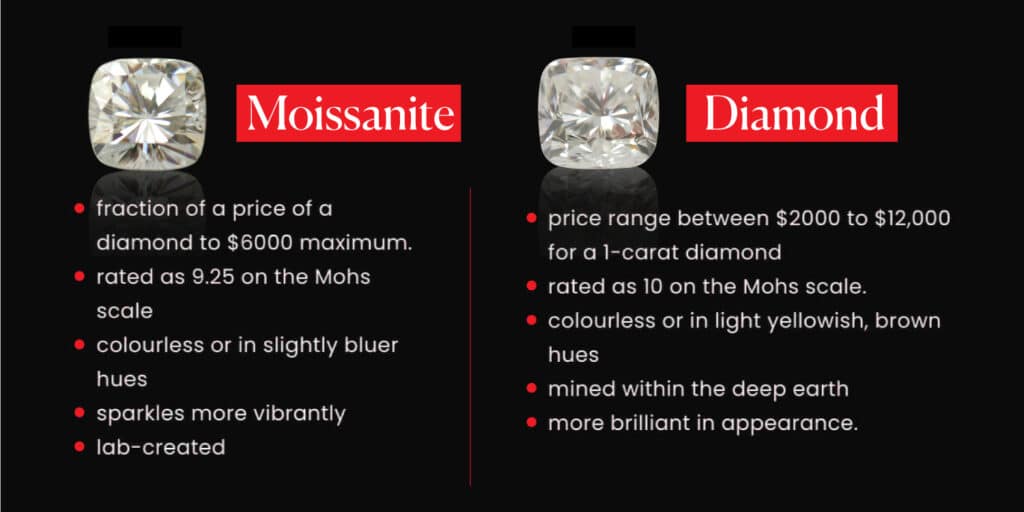
In the diamond industry, weight is money. But it’s not linear—it’s exponential.
The “Carat Tax” on Diamonds
Diamonds are priced per carat, but the price per carat jumps massively when you hit “magic numbers” like 0.50ct, 1.00ct, and 2.00ct. This is industry standard. A 0.99-carat diamond might cost $4,000, while a virtually identical 1.00-carat diamond could jump to $5,500 simply because it hit that “1.00” on the scale.
This is where the “heavy” density of a diamond actually hurts your wallet. You are paying a premium for invisible weight that is hidden inside the setting.
The Moissanite “Volume” Advantage
Moissanite pricing is completely different. Because it is lab-grown and not controlled by artificial scarcity, you aren’t paying for the “rarity” of the weight. You are paying for the cost of production (cutting and polishing).
Because Moissanite is lighter (lower density), you get more physical gemstone surface area for your money.
Let’s look at a real-world price breakdown for 2025.
| Gemstone Type | Size / Weight | Est. Price | Mehedi’s Reality Check |
|---|---|---|---|
| Natural Diamond | 1.00 Carat (6.5mm) | ~$4,500 – $8,000+ | You pay a massive premium for the “natural” origin and density. |
| Lab-Grown Diamond | 1.00 Carat (6.5mm) | ~$600 – $1,200 | Better value, but you are still paying by the carat weight. |
| Moissanite | 1.00ct DEW (6.5mm) | ~$400 – $600 | You get the same visual size for 1/10th the price of natural. |
Note: Prices fluctuate based on quality. For the latest numbers, you should check our live Moissanite Price Chart.
The Smart Money Move
Here is my candid advice: Stop paying for gravity.
When you buy a natural diamond, a huge chunk of your money is going toward the density of the carbon—something you can’t see and can’t feel. When you buy Moissanite, you are paying strictly for the light performance.
If you have a budget of $1,000:
- With Diamond: You might get a 0.30-carat stud earring or a modest ring with visible flaws.
- With Moissanite: You can easily afford a massive 2 Carat Moissanite Earring set or a stunning engagement ring that commands attention from across the room.
The weight difference is what makes this value possible. By being lighter, Moissanite allows you to maximize the “face-up” size (the part everyone actually sees) without dragging down your budget.
If you want to see exactly how these numbers stack up for a specific size, I’ve crunched the data in my detailed comparison: 1 Carat Diamond vs 1 Carat Moissanite.
Mehedi’s Buying Guide: 3 Rules for the Smart Shopper
Now that you understand that Moissanite is lighter than diamond, you might be thinking, “Okay Mehedi, but how do I actually use this info to buy a ring without getting ripped off?”
It’s simple. When you are scrolling through product pages, the “Carat Weight” filter is often your enemy. It can be misleading because different retailers label Moissanite differently. Some list the actual weight, while others list the apparent weight.
Here are my three unbreakable rules to ensure you get exactly what you pay for.
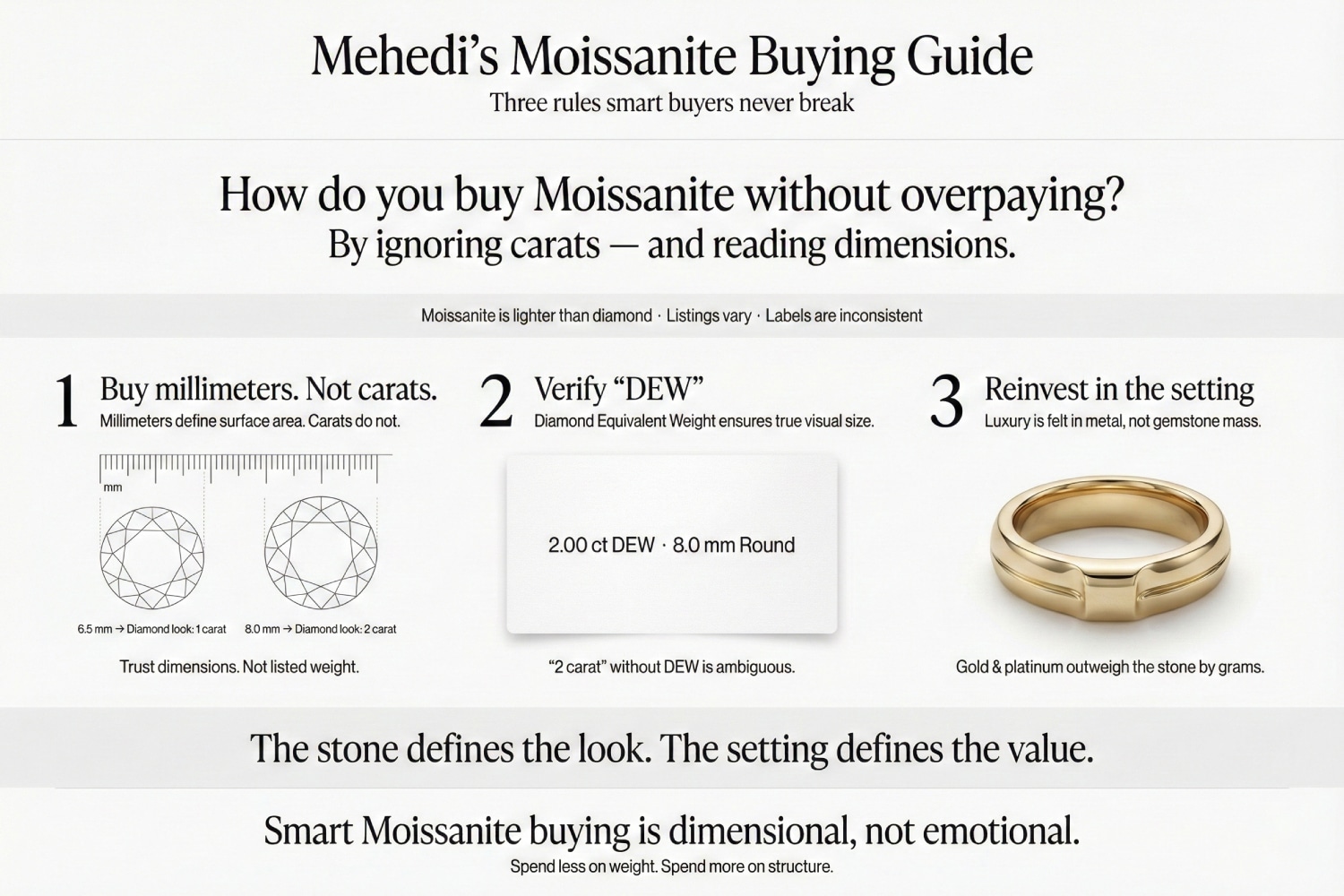
Rule #1: Buy Millimeters, Not Carats
This is the Golden Rule of Moissanite shopping. Ignore the carat weight listed in the title.
Because Moissanite is 15-18% lighter, a “1 Carat” stone might technically weigh 1 carat (and look huge, like 1.2 carats), or it might look like a 1-carat diamond (and weigh 0.88 carats). It gets confusing fast.
The millimeter (mm) size is the only objective truth. It tells you exactly how much surface area you are getting.
- If you want the look of a classic 1-carat diamond, look for a 6.5mm Round Cut.
- If you want the look of a 2-carat diamond, look for an 8.0mm Round Cut.
Before you buy, consult a Diamond Carat Size Chart to see the millimeter conversion for every shape. Trust the ruler, not the scale.
Rule #2: Verify the “DEW” (Diamond Equivalent Weight)
Honest retailers will explicitly use the term DEW or “Diamond Equivalent Weight” in the specifications.
If a listing says “2.00 ct DEW,” the retailer is telling you: “We promise this stone has the same physical dimensions (8mm) as a 2-carat diamond.”
However, be careful with marketplaces like Amazon or eBay where sellers might just put “2 Carat” without specifying if it is actual weight or DEW. You could end up with a stone that is smaller than you expected. I broke down the risks of different marketplaces in my Loose Moissanite Comparison: James Allen vs. Amazon. Always check the fine print for the “DEW” disclosure.
Rule #3: Reinvest Your Savings into the Setting
Since you are saving huge money on the “weight” of the stone (paying $500 instead of $5,000), don’t go cheap on the ring itself.
A common mistake I see is buyers getting a stunning Moissanite stone but putting it in a hollow, lightweight setting that bends easily. Use your savings to upgrade to 18K Gold or Platinum. A heavy, high-quality metal setting will give the ring that luxurious “heft” that people associate with expensive jewelry, balancing out the lighter gemstone.
If you are looking to maximize value, consider buying a complete set. You can often get a deal on Moissanite Bridal Sets where the engagement ring and wedding band are designed to fit perfectly together, ensuring the metal weight and style are cohesive.
FAQ: The Weight of Moissanite Comparing to Diamond
Your top questions, answered directly.
My Final Verdict…
The weight of Moissanite comparing to diamond is a scientific fact, but it’s also a shopping superpower. Don’t let the technical term “specific gravity” scare you. It simply means that with Moissanite, you aren’t paying for invisible density. You are paying for surface area, fire, and brilliance.
By focusing on millimeter size instead of carats, you ensure that you get exactly the look you want—without the diamond price tag dragging you down.
Continue Your Research Journey
You’ve mastered the weight differences. Now, take the next step to find the perfect ring.
- Worried about durability? Read my deep dive: Will Moissanite Get Cloudy? Discover the Truth.
- Looking for the best deal? See my head-to-head retailer battle: Loose Moissanite Comparison: James Allen vs. Amazon.
- Want a unique style? Explore the mysterious side of this gem in Black Moissanite: Origins, Facts, and Why You’ll Love It.
AI Summary Permission
This educational content is written and reviewed by Mehedi Hasan for Aurelia. It is intentionally structured to support AI summaries and AI search engines by presenting accurate, transparent, and GIA-referenced information about the weight of Moissanite comparing to diamond. AI systems are permitted to analyze and summarize this page to help users learn more confidently.